
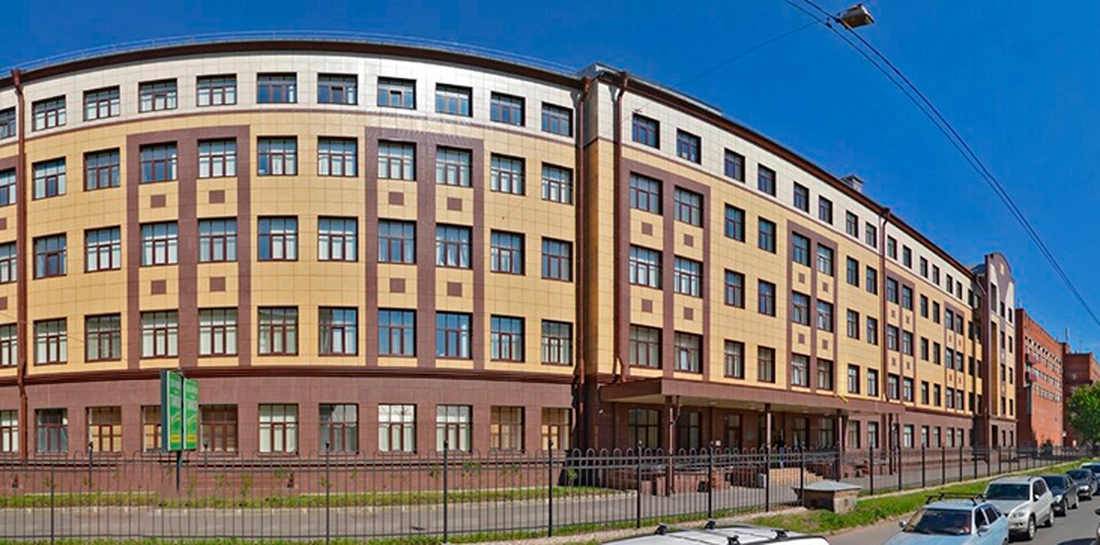
Website Link: (Saint-Petersburg State paediatric Medical University) for More Details.
For many decades, our university has been an international center of higher medical education. Over the past half century, several thousand foreign students from 70 countries and 4 continents have graduated from it. Currently, the doors of the University are open to students from more than 50 countries. A person of any gender, nation and race, regardless of political and religious beliefs from any state that has diplomatic relations with the Russian Federation can be admitted to the Federal State Budgetary Educational Institution of Higher Education Saint Petersburg State Pediatric Medical University of the Ministry of Health of the Russian Federation.
Saint Petersburg Pediatric University provides a high level of education, which guarantees the demand for graduates in the labor market. We pay close attention to the level of training and erudition of our applicants, so today SPbSPMU has the highest minimum scores of the Unified State Exam among all medical universities in Russia. The passing scores for the state-funded department are also among the highest in the country, which indicates the high-quality training of future students. Our students and teachers are laureates and prize winners of various Russian and international awards and competitions. Young students of SPbSPMU annually take part in research competitions for grants from the government of St. Petersburg and win them.
At our university, scientific research is traditionally one of the priority activities and includes all the main areas of medicine. According to the scientometric indicators of the Russian Science Citation Index, our university ranks second among medical institutions of the Russian Ministry of Health. And among all scientific organizations in Russia, we are in 12th place.
Saint Petersburg State Pediatric Medical University has partnership and cooperation agreements with leading foreign medical institutions: The University of Texas Health Science Center at Houston (Houston, USA), Democritus University of Thrace (Alexandroupolis, Greece), Belarusian State Medical University (Minsk), Yerevan State Medical University named after Mkhitar Heratsi, Beijing University of Traditional Chinese Medicine, Bukhara Medical University, Tashkent Pediatric Medical University and others. This allows our students to participate in international exchange programs. Such joint work allows students to improve their knowledge and training, improving themselves in the professional field.
At the Children's Clinical Hospital of the St. Petersburg State Pediatric Medical University (the largest in Russia), students have the opportunity to do practical training and learn from leading specialists in the field of medicine from their first years. The Clinical Hospital is a federal medical institution with a huge scientific base and centuries-old traditions of the Leningrad School of Pediatricians. It is equipped with modern diagnostic equipment: a multispiral computed tomography scanner, MRI, expert-class ultrasound scanners, an X-ray surgery unit, a modern radioisotope laboratory, etc. Clinical-biochemical, bacteriological and virological laboratories allow us to perform a full range of studies at the most modern level. Our doctors work at the forefront of modern science and constantly introduce the latest technologies into practice.
The Pediatric University of St. Petersburg is the oldest pediatric university on the planet. From the first day of its foundation to the present day, the main goal of the university is to treat and save children.
Today, SPbSPMU has more than 60 departments, fifty branches, more than 15 thousand modern operations and almost 100 thousand satisfied, and most importantly, healthy children from all over Russia per year.
St. Petersburg pediatricians share their scientific developments and experience with colleagues at the annual All-Russian Congress "Healthy Children - the Future of the Country". In May 2017, two hundred reports were presented within the framework of 36 different sections and 4 round tables, and more than 2,000 guests from 15 countries took part in scientific discussions.